Thinking about buying a vacation rental in Poipu? You are looking at one of Kauai’s most established resort markets, where location, legal use, and guest appeal can shape your results just as much as the property itself. If you want to understand what makes Poipu different, what kinds of properties tend to fit traveler demand, and what due diligence matters most before you buy, this guide will help you get oriented. Let’s dive in.
Why Poipu Draws Vacation Rental Buyers
Poipu stands out because it is not just a beautiful South Shore destination. County materials describe Koloa-Poipu as Kauai’s premier resort destination, and the Poipu Road corridor serves as a key gateway connecting visitors to beaches, shops, nearby towns, and other attractions. For you as a buyer, that means guest demand is often tied to the full experience of staying in Poipu, not just the features inside one unit.
Poipu is also one of Kauai’s three main Visitor Destination Areas. That matters because Kauai County says short-term rentals under 180 days are not permitted outside the Visitor Destination Area. In simple terms, Poipu occupies a very different position from a typical residential neighborhood when you are evaluating vacation rental potential.
The scale of the visitor market helps explain the opportunity. The 2025 Visitor Plant Inventory shows 3,517 visitor units in the Poipu/Kukuiula area, compared with 2,344 in Princeville/Hanalei and 1,915 in Wailua/Kapaa. That makes Poipu one of the island’s largest concentrations of visitor accommodations.
What Poipu’s Inventory Tells You
Poipu is a mixed resort market rather than a one-size-fits-all vacation rental area. According to the 2025 Visitor Plant Inventory, the Poipu/Kukuiula area includes 1,224 hotel units, 914 vacation rental units, 772 timeshare units, and 540 condo-hotel units. This mix helps show why buyer strategy in Poipu often overlaps with hospitality thinking as much as residential real estate.
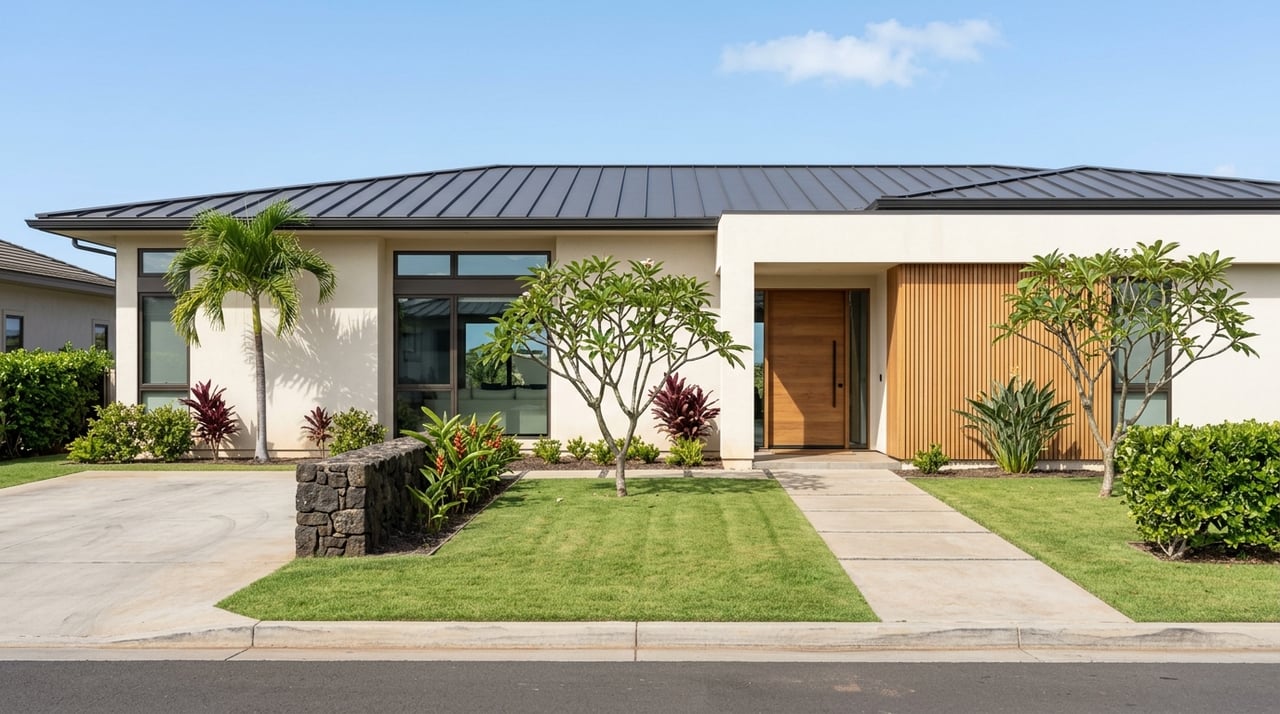
That broad mix can be helpful if you are comparing options. You may find condo-style properties, resort-adjacent residences, and homes with different operational profiles. The right fit depends on your budget, your management plan, and how closely the property matches what travelers are already booking in this market.
Third-party short-term rental data points in a similar direction. AirROI reports that Poipu’s active STR inventory is about 70.1% apartment or condo and 26.5% houses, with 96.8% listed as entire-home or entire-apartment stays. That suggests many guests are choosing private, self-contained accommodations over shared formats.
Property Types That Often Fit Demand
If you are trying to match buyer expectations with traveler demand, smaller formats deserve a close look. AirROI says 1- and 2-bedroom units make up 69.5% of active listings, while 3-bedroom-and-larger properties account for 28.0%. This tells you that compact, well-located units are a major part of the market.
That does not mean larger homes cannot perform well. It does mean you should evaluate size in context with price point, amenities, and booking demand. In Poipu, a smaller turnkey condo in a strong location may compete differently than a larger resort home that depends on a different guest profile.
Subareas within Poipu also attract different traveler preferences. AirROI highlights Poipu Beach, Shipwreck Beach, Lawai Valley, Koloa, the Grand Hyatt area, Sunny Poipu, Makahuena Point, and Nukumoi Point as distinct submarkets. While each has its own feel, the shared theme is access to beaches, scenery, and resort conveniences.
Amenities Guests Often Prioritize
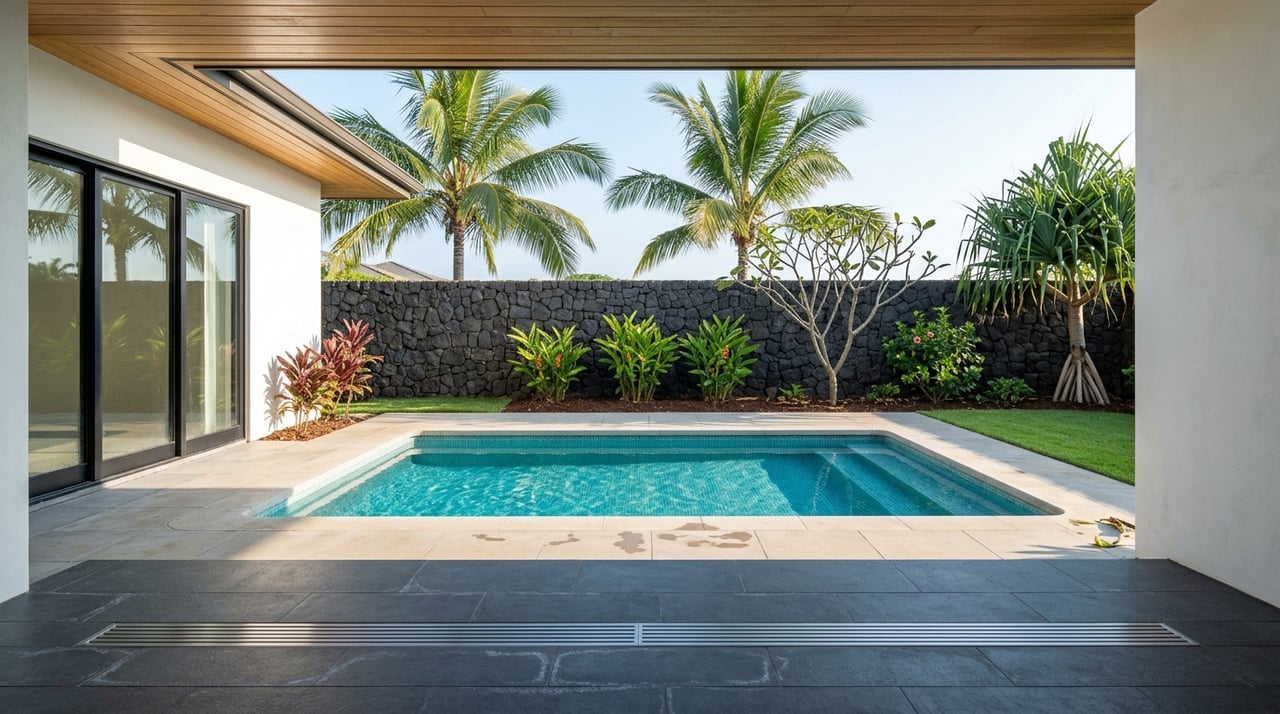
In Poipu, amenities are not a small detail. They are often part of the core booking decision. Market data suggests that walkability, views, pools, air conditioning, parking, and turnkey presentation can carry real weight with guests.
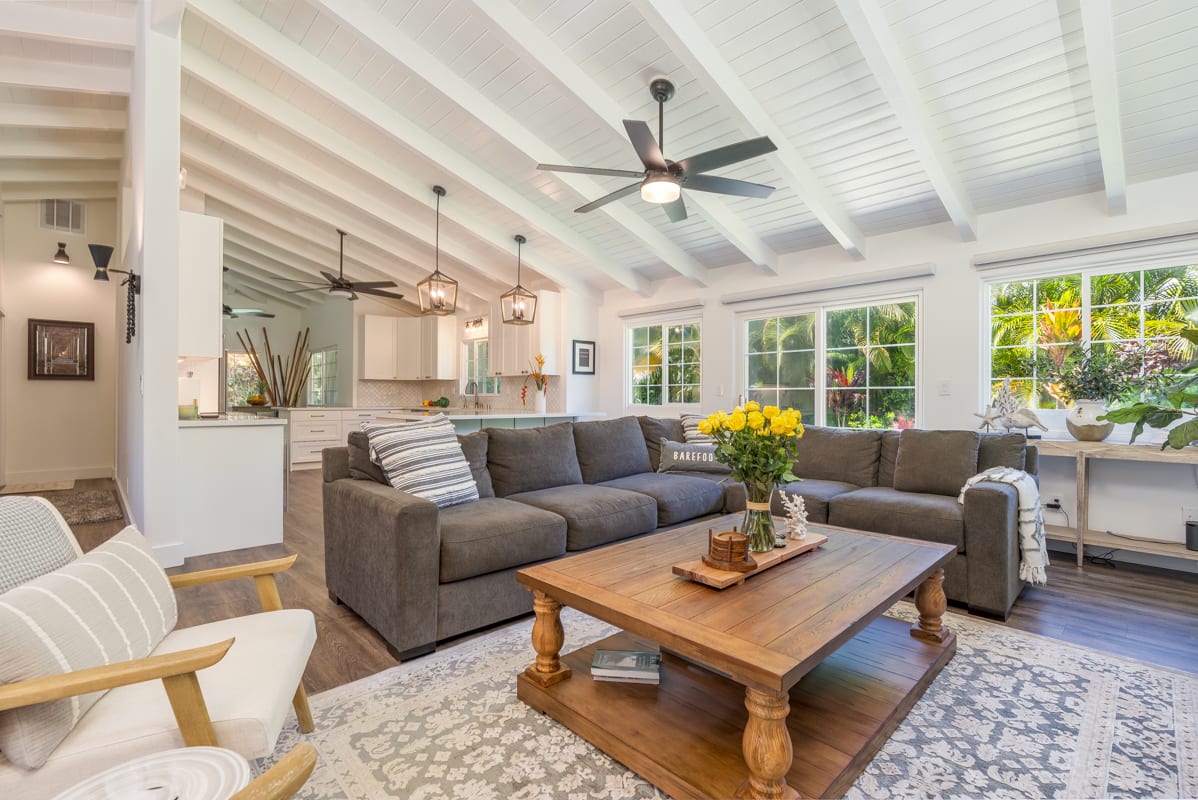
That is one reason Poipu rewards properties that feel easy to enjoy from day one. A well-prepared unit with a clear amenity package may have an edge over a similar property that needs updating, lacks cooling, or feels less convenient for a visitor stay. In a resort market, convenience and presentation often work together.
This is also where thoughtful property selection matters. You are not just buying square footage. You are buying a guest experience, and in Poipu that experience is often tied to proximity, comfort, and how effortlessly the property fits a vacation routine.
How to Read Poipu Revenue Data
Vacation rental performance data can be useful, but it should never be treated as a guarantee. Different platforms report different numbers, and those differences usually reflect methodology, map boundaries, and the mix of listings being tracked. The most useful approach is to treat market data as a starting point for underwriting, not a final answer.
AirROI’s Poipu report, based on May 2025 through April 2026 data, shows average annual revenue of $79,871, occupancy of 47.0%, an average daily rate of $612, and RevPAR of $282. It also shows an average booking lead time of about 105 days. That paints a picture of a market with strong rate potential and a booking window that often extends well beyond last-minute travel.
AirDNA’s broader Koloa market report shows higher figures, including 65% occupancy, a $723.2 average daily rate, and $96.6K in annual revenue across 2,487 listings. Since these datasets do not measure the market in exactly the same way, the gap is important. It tells you to compare data carefully and avoid relying on one headline number.
Why Underwriting Needs a Property-Level Lens
The biggest takeaway is that averages are just averages. AirROI notes that its revenue figures reflect market averages from active listings and are not projections for a specific property. If you are evaluating a purchase, you still need parcel-specific due diligence.
That means looking at the exact location, legal use, condition, amenity set, bedroom count, HOA or condo documents if applicable, and likely management structure. Two properties in Poipu can perform very differently even if they are only a short distance apart. In a resort market, the details matter.
A careful buyer usually compares not only neighborhood-level data, but also nearby competing inventory. You want to understand how your target property would sit within the market, what type of guest it would attract, and whether its price point aligns with its likely positioning.
Operations Matter in Poipu
Poipu appears to be a relatively mature short-term rental market, and that has real implications for ownership. AirROI reports that 67.3% of listings are Superhosts, 56.9% are professionally managed, and only 8.5% use Instant Book. In other words, service quality and operational discipline appear to be common expectations, not optional extras.
For you, this means the purchase decision should include an operating plan from the start. You may prefer self-management, co-hosting, or full-service local management, but you should know how your property will be run before you close. A market with experienced operators tends to reward consistency, responsiveness, and polished guest care.
AirROI also identifies top operators in the market, including Parrish Kauai, Suite Paradise, and Koloa Kai. That reinforces the idea that local management infrastructure already exists in Poipu, which can be useful if you want a more hands-off ownership model.
Rules and Legal Status to Verify
Before you get too far into the numbers, confirm legal use. Kauai County says short-term rentals of less than 180 days are not permitted outside the Visitor Destination Area, and buyers are directed to verify legal status through the county’s approved homestay and non-conforming TVR list by TMK. This is one of the most important checkpoints in your due diligence.
If you are buying an existing TVR, the county says you should obtain the prior file, the most recent renewal packet, and the county’s renewal letter. The county also states that renewal packets must be mailed at least two months before renewal and that there is no grace period for late renewal. These are not small administrative details. They are part of protecting the asset you are buying.
Because rules and records are property-specific, it helps to approach every opportunity with documentation first. In a market like Poipu, legal status is a core part of value.
Taxes to Plan for Early
Taxes are another key part of your ownership math. Hawaii’s Department of Taxation says short-term rentals are subject to GET and TAT, and Kauai County also imposes its own 3% county transient accommodations tax. The state licensing page also shows that operators of transient accommodations must register for both GET and TAT.
For a buyer, that means taxes should be part of your planning before closing, not something you sort out later. Your accountant or tax advisor can help you understand setup, filing, and how these obligations affect your net operating picture. Clear tax planning is part of buying responsibly.
Poipu Compared With Other Kauai Resort Areas
If you are also weighing Princeville, Kapaa, or other parts of the island, Poipu has a distinct profile. The 2025 Visitor Plant Inventory shows that Poipu is the largest of Kauai’s major resort areas by total visitor units. It also has a more hotel- and condo-hotel-heavy mix than Princeville/Hanalei.
That makes Poipu especially attractive if you are looking for a market shaped by established visitor demand and resort-style accommodations. Rather than functioning like a fringe short-term rental pocket, Poipu is one of Kauai’s core legal vacation rental clusters. That can create a clearer framework for buyers who want to invest in an area already built around visitor use.
What a Smart Poipu Search Looks Like
The strongest opportunities in Poipu are often the ones that align several factors at once. You want a property type that matches traveler demand, a location with proven visitor appeal, legal status you can verify, and an operating plan that reflects the realities of a competitive resort market. Missing one of those pieces can change the investment story quickly.
This is where local guidance can save you time and help you avoid expensive assumptions. In Poipu, it is rarely enough to ask whether a property is beautiful or whether the gross revenue sounds attractive. The better question is whether the property fits the market, the rules, and your ownership goals.
If you are exploring vacation rental opportunities in Poipu, working with someone who understands South Shore inventory, resort positioning, and property-level due diligence can help you evaluate options with more clarity. When you are ready to talk through the market, connect with Susan Higgins for thoughtful, concierge-level guidance on Kauai’s South Shore.
FAQs
What makes Poipu different for vacation rentals on Kauai?
- Poipu is one of Kauai’s three main Visitor Destination Areas, and Kauai County says short-term rentals under 180 days are not permitted outside the VDA.
What property types are most common in the Poipu vacation rental market?
- AirROI reports that active short-term rental inventory in Poipu is mostly apartments and condos, with 1- and 2-bedroom units making up the largest share of listings.
What amenities matter most for Poipu vacation rental guests?
- Market data suggests guests often prioritize beach access, views, pools, air conditioning, parking, walkability, and turnkey presentation.
What should you verify before buying a Poipu vacation rental?
- You should confirm legal status by TMK with Kauai County and review property-specific records such as prior TVR files, renewal materials, and other due diligence documents tied to the asset.
What taxes apply to a short-term rental in Poipu?
- Hawaii’s Department of Taxation says short-term rentals are subject to GET and TAT, and Kauai County also imposes a 3% county transient accommodations tax.
Is professional vacation rental management common in Poipu?
- Yes. AirROI reports that 56.9% of active listings are professionally managed, which suggests local management systems are a common part of the market.